Verifying that a Chinese LED lighting supplier is legitimate before placing an order is the single most important step in B2B procurement. Industry estimates suggest that 70-80% of Alibaba LED suppliers are trading companies rather than actual manufacturers — and some listings are entirely fraudulent.
This guide provides a practical, step-by-step verification process that any buyer can follow, using free public databases and common-sense audit techniques.
Why Verification Matters
The risks of skipping verification:
| Risk | Consequence |
|---|---|
| Fake company | Payment sent, goods never shipped |
| Trading company posing as factory | Higher prices, no quality control, no customization |
| Unregistered exporter | Cannot legally export, customs problems, no after-sales |
| No real factory | Product quality inconsistent, no QC, delivery delays |
| Expired/invalid certifications | Products fail destination market compliance |
Step 1: Verify Business Registration (Free, 5 Minutes)
Every legitimate Chinese company is registered in the National Enterprise Credit Information Publicity System (国家企业信用信息公示系统).
How to Check:
- Go to gsxt.gov.cn (English interface available)
- Enter the company’s Chinese name or Unified Social Credit Code
- Review the registration details
What to Verify:
| Field | What to Check |
|---|---|
| Company name | Matches what the supplier claims |
| Unified Social Credit Code | 18-character code, must match supplier documents |
| Legal representative | Real person, matches business license |
| Registration date | Older companies are generally more reliable |
| Registration status | Must be “存续” (active/operating) |
| Business scope | Must include “manufacturing” or “import/export” |
Red flag: If the company cannot be found on gsxt.gov.cn, or if the registration status shows “revoked” or “cancelled” — do not proceed.
Step 2: Verify Customs Registration (Free, 10 Minutes)
A legitimate Chinese exporter must be registered with China Customs as an Import/Export Goods Receiver-Sender (进出口货物收发货人). This is a separate registration from the business license.
How to Check:
Ask the supplier for their Customs Registration Certificate (报关单位备案证明). This document shows:
- Customs registration number
- Registered customs office (e.g., Shenzhen Customs, Jinyang Customs)
- Entity type: should be “Import/Export Goods Receiver-Sender”
- Authorization scope: should include “import and export of goods and technology”
Red flag: If a supplier claims to export directly but cannot produce a customs registration certificate, they are likely using a third-party trading company to handle exports — adding cost and reducing accountability.
Step 3: Distinguish Manufacturer vs Trading Company
This is the most searched question in B2B LED procurement. Here is the honest answer:
How to Tell the Difference:
| Indicator | Manufacturer | Trading Company |
|---|---|---|
| Business scope on license | Includes “生产” or “制造” (manufacturing) | Includes “销售” or “批发” (sales/wholesale) |
| Registered address | Industrial zone, factory district | Office building, commercial district |
| Registered capital | Typically RMB 1M+ | Often RMB 100K-500K |
| Factory photos | Consistent location, verifiable | Stock photos or inconsistent |
| Product range | 1-3 related categories | 10+ unrelated categories |
| Customization capability | Owns molds, production lines | Relies on partner factories |
Is a Trading Company Always Bad?
No. A transparent trading company with verified partner factories can offer advantages over a direct factory:
- Broader product range — access to multiple factory lines
- Better English communication — dedicated foreign trade staff
- Export expertise — documentation, customs, logistics handled professionally
- Quality control across sources — multi-factory QC standards
- Lower MOQ — consolidation across factories
- OEM/ODM flexibility — can match the right factory to each requirement
The key is transparency. A trading company that honestly states its business model and provides verifiable partner factory information is more trustworthy than a trading company pretending to be a factory.
Step 4: Request a Video Factory Walkthrough
After document verification, request a live video call (not pre-recorded video) to tour the production facility.
What to Look For During the Video Tour:
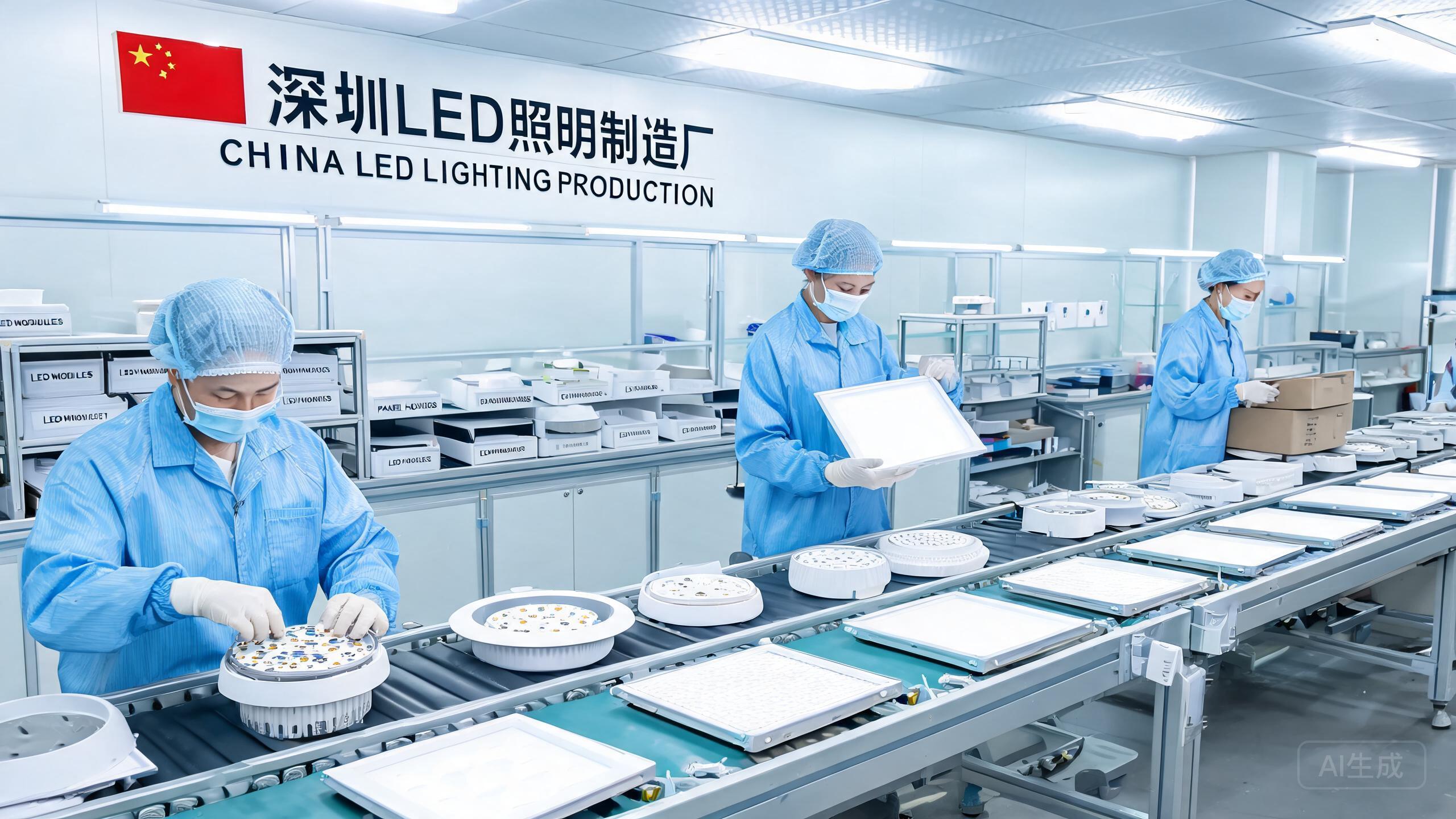
- Production line with workers actively assembling LED fixtures
- SMT machines for LED PCB assembly (or manual soldering for smaller operations)
- Integrating sphere or photometric testing equipment
- Aging test area (rows of lit fixtures on test racks)
- Warehouse with finished goods and raw materials
- QC inspection station with testing records
- Company name on building exterior or factory entrance
Red flag: If the supplier refuses a video call, only sends pre-recorded video, or the “factory” shows no activity, no workers, or no equipment — they are likely a trading company without manufacturing access.
Step 5: Third-Party Factory Audit
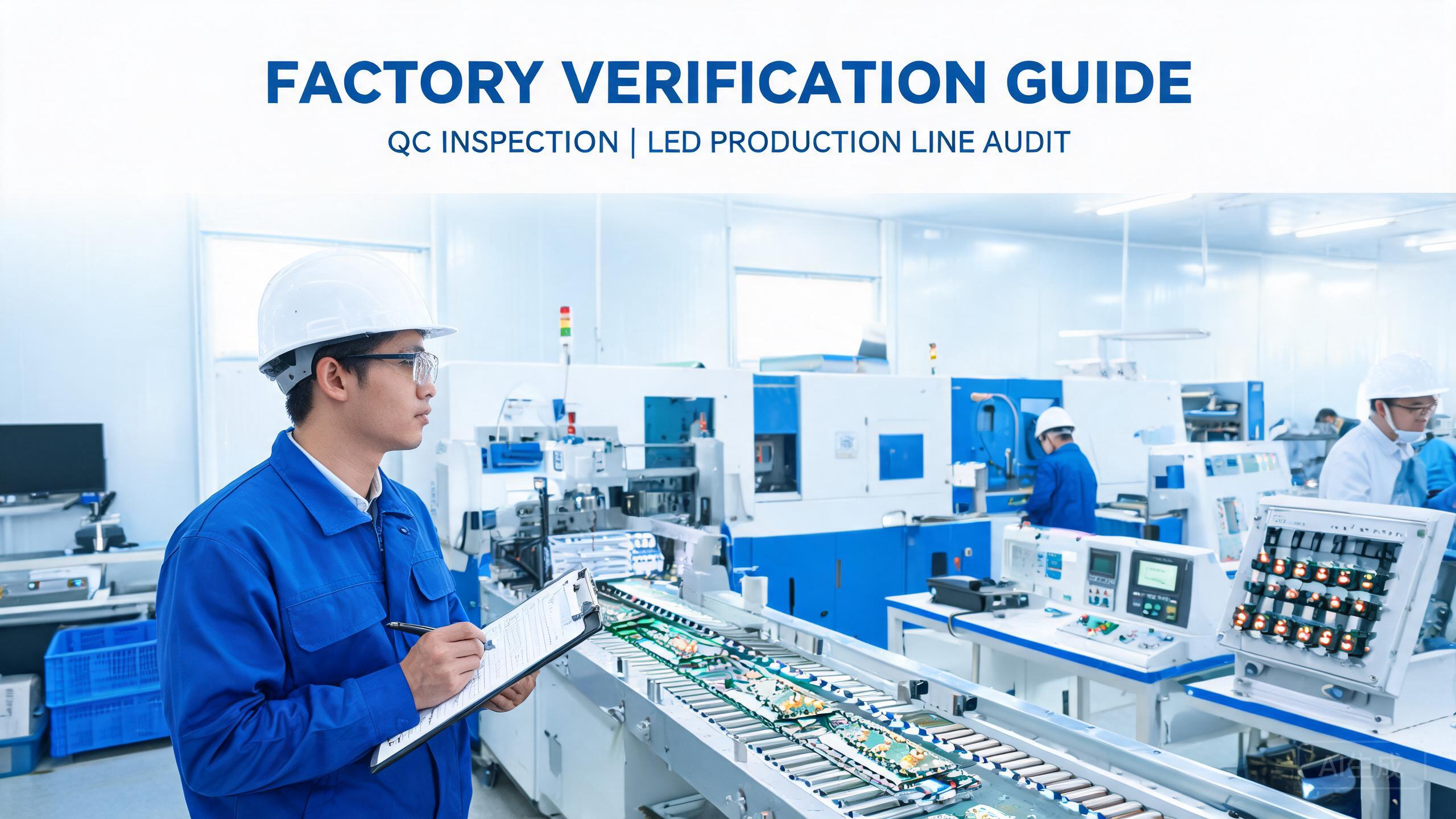
For large orders or ongoing partnerships, commission an independent factory audit:
| Audit Type | Provider | Cost | What It Covers |
|---|---|---|---|
| Basic factory audit | SGS, Intertek, TUV | $300-800 | Company verification, facility walk-through, capacity assessment |
| Technical audit | SGS, Intertek | $500-1,200 | Production process, QC system, equipment list, defect rate |
| Social compliance audit | BSCI, SEDEX | $400-900 | Labor practices, working conditions, environmental compliance |
| Sample testing | SASO-recognized lab | $200-500 per model | Product specifications, safety, performance |
Step 6: Verify Product Certifications
Legitimate certifications can be verified on official databases:
| Certification | Verification Method |
|---|---|
| CE | Check the issuing Notified Body number on ec.europa.eu |
| RoHS | Request test report from a recognized lab |
| SASO/SABER | Verify on saber.sa with the certificate number |
| G-Mark | Verify on the GSO website gso.org.sa |
| ISO 9001 | Verify on the certification body’s website (e.g., SGS, BSI) |
| UL/ETL | Verify on ul.com or intertek.com |
Red flag: If a supplier shows certification images but cannot provide the certificate number, issuing body, or test report — the certification is likely fake.
Step 7: Start with a Sample Order
Before committing to a bulk order:
- Order 1-5 sample units
- Test them: luminous flux, CRI, color temperature, dimming performance, thermal performance
- Compare against the supplier’s datasheet specifications
- Check build quality: soldering, housing finish, driver brand, LED chip brand
- If satisfied, proceed with a small first order (50-100 units) before scaling
Red Flags Summary
| Red Flag | Severity | What It Means |
|---|---|---|
| Not found on gsxt.gov.cn | Critical | Company may not exist |
| No customs registration | High | Cannot legally export |
| Refuses video call | High | Likely no real factory access |
| Certification without certificate numbers | High | Certifications may be fake |
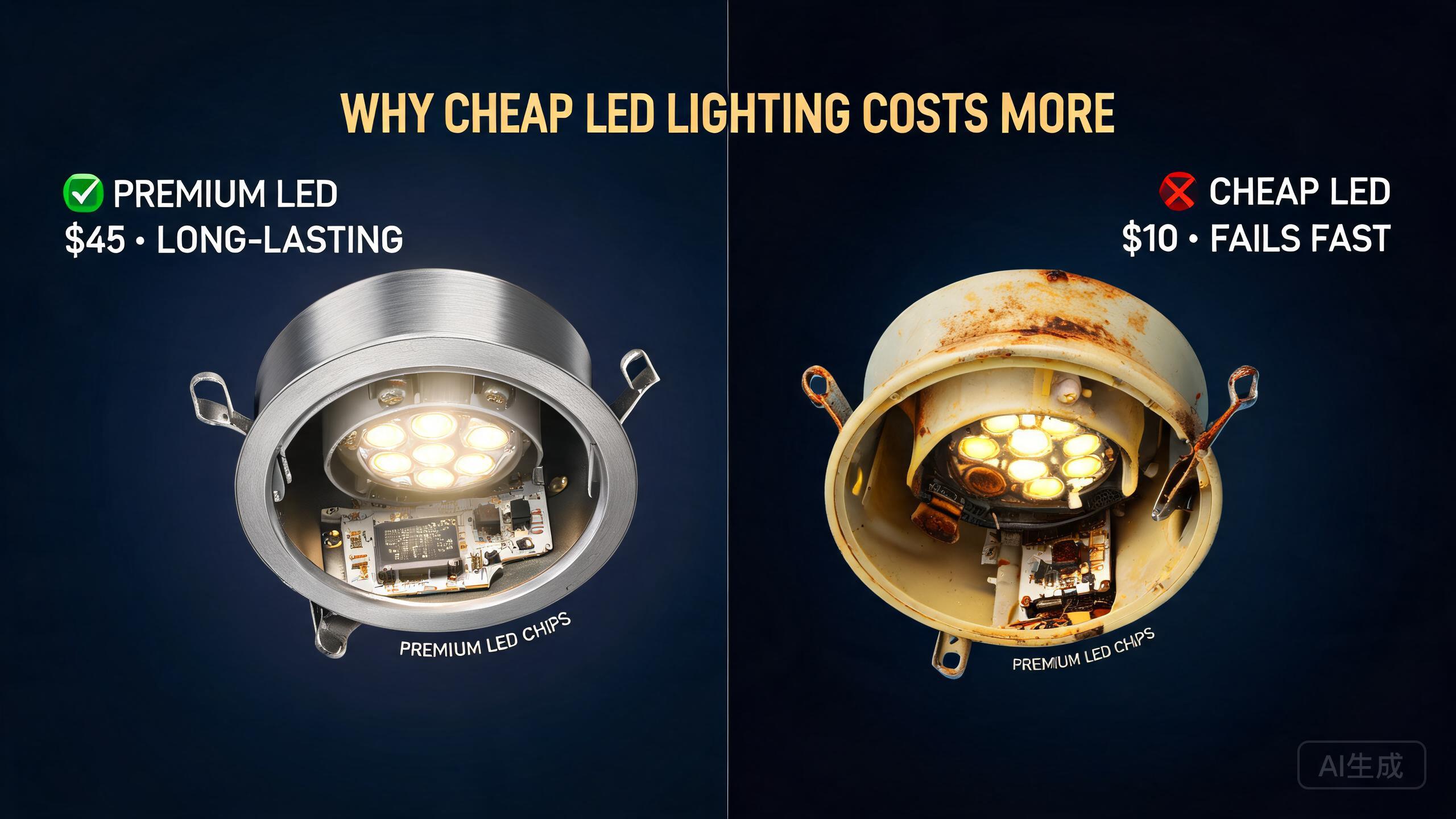
| Prices 30%+ below market average | High | Quality will be cut somewhere |
| Cannot provide test reports | Medium | Products not properly tested |
| Only accepts Western Union or cryptocurrency | Critical | High fraud risk |
| Factory address is a residential building | High | Not a real factory |
| Product range spans unrelated industries | Medium | Trading company, not specialized |
How Yakeen Lighting Approaches Verification
Yakeen Lighting (legal entity: Taiyuan Yakeen Trading Co., Ltd.) operates an integrated manufacturing model:
Our manufacturing model:
- A registered company with import/export authorization (Jinyang Customs, verifiable on gsxt.gov.cn)
- Unified Social Credit Code: 91140105MAKGNY4D8A
- Partner factory network across Shenzhen, Zhongshan, and Ningbo — each factory specializes in specific product categories
- In-house QC team inspects every production batch before shipment (5-stage QC process)
- 97%+ on-time delivery rate across 2025-2026
Why our model works for buyers:
- Broader product range than any single factory (10+ categories from specialized factories)
- Consistent QC standards across all product lines
- OEM/ODM flexibility — we match the right factory to each project requirement
- Full export documentation, customs clearance, and SABER registration handled in-house
- Dedicated English-speaking project managers for international clients
What we provide for verification:
- Business license (verifiable on gsxt.gov.cn with our Unified Social Credit Code)
- Customs registration certificate (Jinyang Customs — Import/Export Goods Receiver-Sender)
- Partner factory introductions and live video tours
- Third-party audit support (SGS, Intertek available on request)
- Product test reports from SASO-recognized laboratories
- Live factory video walkthrough via video call
- Sample orders for testing before bulk commitment
We believe that transparency builds longer-lasting partnerships than pretense. Contact us to start the verification process.
Verification Checklist for Buyers
Print this checklist before evaluating any Chinese LED lighting supplier:
- Company verified on gsxt.gov.cn (business license active)
- Unified Social Credit Code matches across all documents
- Customs registration certificate provided
- Business scope appropriate for LED lighting
- Video factory walkthrough completed (live, not pre-recorded)
- Product certifications verified on official databases
- Test reports from recognized laboratories provided
- Sample ordered and tested against specifications
- ISO 9001 certificate valid and current
- Payment terms include T/T or L/C (no Western Union only)
- Third-party audit commissioned (for large orders)
- References from other buyers obtained (if possible)
Following this checklist does not guarantee a perfect supplier, but it eliminates the majority of common B2B procurement risks in the Chinese LED lighting industry.