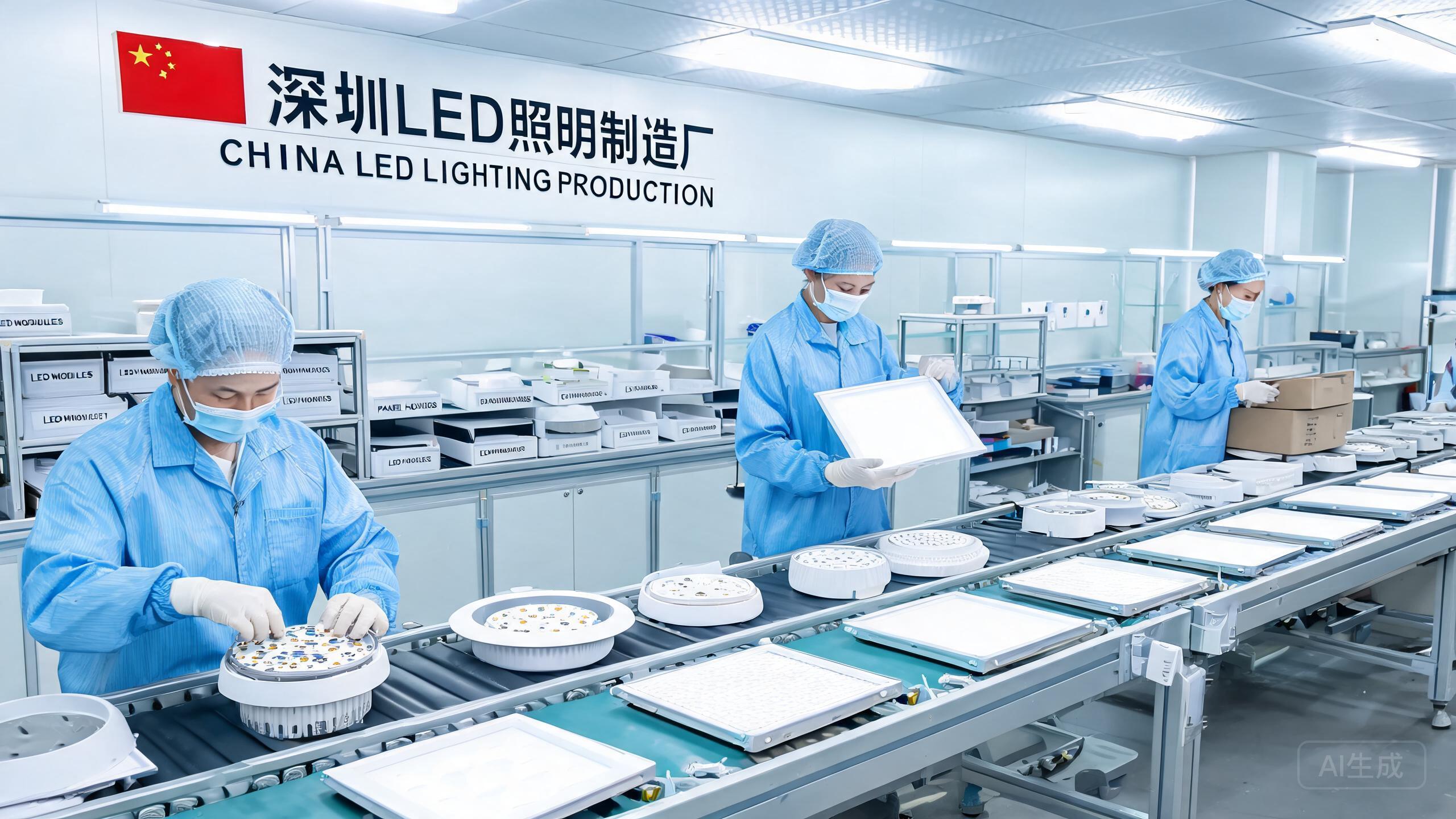
China produces over 80% of the world’s LED lighting products, making it the primary sourcing destination for commercial lighting importers worldwide. For Middle East buyers, choosing the right Chinese commercial lighting manufacturer directly impacts product quality, certification compliance, delivery timelines, and ultimately, business reputation.
This guide breaks down the evaluation criteria that matter most for GCC market buyers.
Why Source Commercial Lighting from China?
Chinese LED lighting manufacturers offer three structural advantages:
- Cost efficiency: 30-50% lower unit costs compared to European or American manufacturers, primarily due to integrated supply chains and scale economies
- Product range: A single manufacturer can supply 10+ product categories (downlights, panels, track lights, high bay, solar street lights), reducing sourcing complexity
- Customization flexibility: OEM/ODM services allow private labeling from 100 pieces and full product redesign from 1,000 pieces
For Middle East buyers specifically, Chinese manufacturers familiar with GCC standards (SASO, G-Mark, SABER) can handle certification paperwork that would otherwise require a separate compliance consultant.
Essential Certifications to Verify
SASO Certification (Saudi Arabia)
SASO (Saudi Standards, Metrology and Quality Organization) certification is mandatory for all lighting products imported into Saudi Arabia. Without it, customs will reject the shipment at the port.
The certification process involves:
- Product testing at a SASO-accredited laboratory
- Certificate of Conformity (CoC) issuance
- SABER platform registration
A reliable Chinese manufacturer should provide SASO certificates and assist with SABER registration as part of their service. If a supplier cannot produce a valid SASO certificate or claims “we can arrange it later,” this is a significant red flag.
G-Mark (GCC Wide)
G-Mark is the GCC Conformity Marking accepted across all 6 GCC countries: Saudi Arabia, UAE, Qatar, Kuwait, Bahrain, and Oman. It enables duty-free movement of certified products across the region.
While not always mandatory at port of entry (SASO is the primary requirement for Saudi Arabia), G-Mark certification signals that the manufacturer has invested in regional compliance — a strong indicator of Middle East market experience.
CE and RoHS
CE marking confirms compliance with European health, safety, and environmental protection standards. RoHS restricts the use of hazardous substances (lead, mercury, cadmium) in electrical equipment.
Both certifications should be standard documentation from any reputable Chinese lighting manufacturer. Their absence suggests the factory is producing for domestic or unregulated markets only.
ISO 9001:2015
ISO 9001:2015 certification verifies that the manufacturer operates a documented quality management system. While ISO certification alone doesn’t guarantee product quality, its absence — especially for factories claiming “premium quality” — is a warning sign.
Evaluating Manufacturing Capabilities
Factory Audit
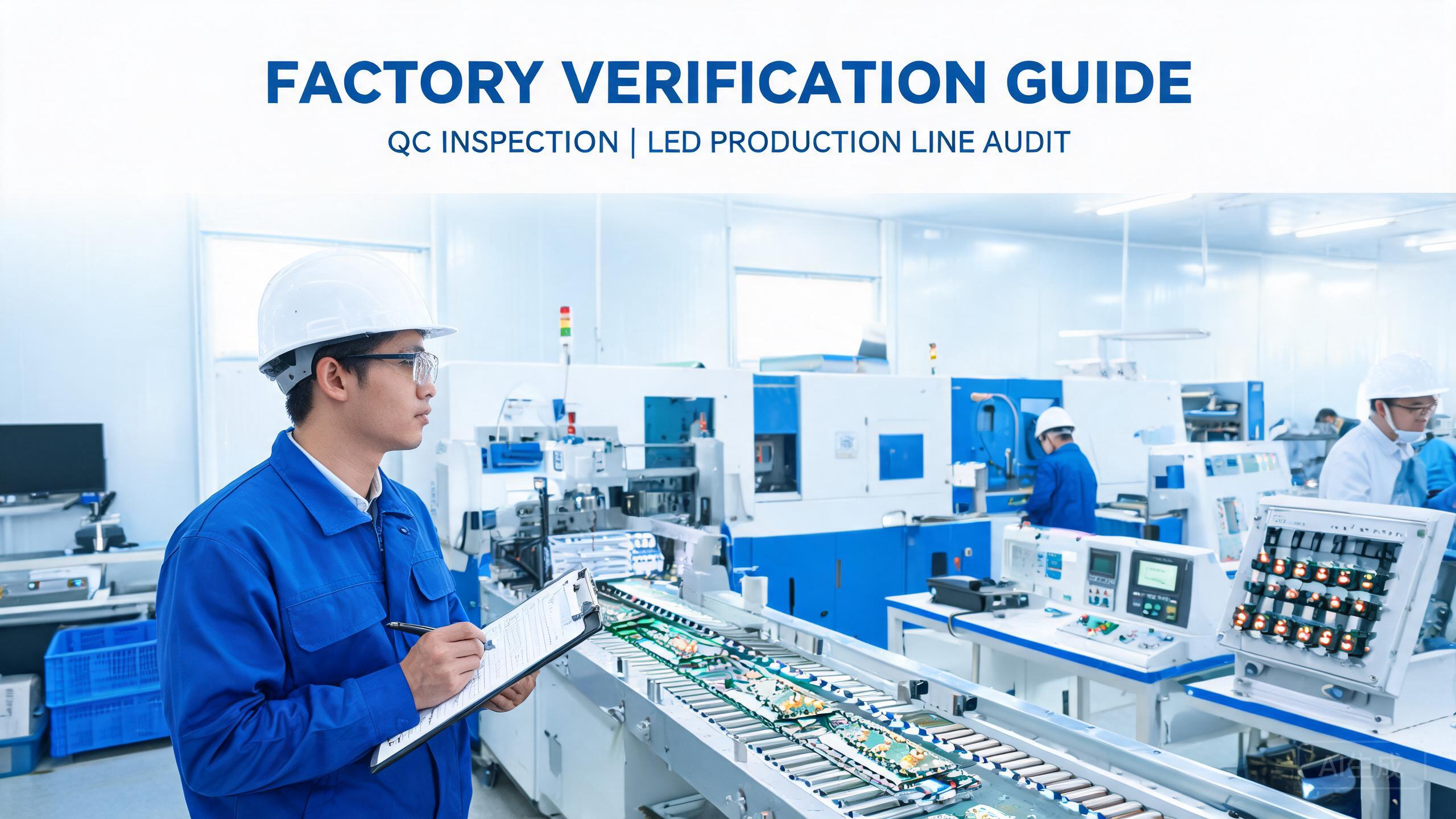
The most reliable verification method is a factory audit. If you cannot visit in person, reputable manufacturers offer:
- Video factory tours: Pre-recorded or live video walkthroughs showing production lines, QC labs, and testing equipment
- Third-party audit reports: SGS, TÜV, or Intertek factory audit reports commissioned by the supplier
- Live video calls: Real-time video calls where you can request to see specific production stages or testing procedures
Production Capacity
Verify that the manufacturer’s production capacity matches your order volume:
| Order Size | Minimum Factory Capacity Needed |
|---|---|
| 1,000-5,000 units | 10,000 units/month |
| 5,000-20,000 units | 50,000 units/month |
| 20,000+ units | 100,000+ units/month |
Ask for recent production records or shipment photos to verify claimed capacity.
Quality Control System
A reliable manufacturer should have a multi-stage QC process:
- Incoming material inspection: LED chips, drivers, housings tested before assembly
- In-line production QC: Random sampling during assembly (typically AQL 2.5)
- Aging test: 4-24 hour aging test for 100% of finished products
- Final inspection: Photometric, electrical, and visual inspection before packing
- Pre-shipment inspection: Carton count, labeling, and packaging verification
Technical Documentation
Request the following technical documents before placing an order:
- LM-80 LED chip test report (lumen maintenance)
- TM-21 lumen maintenance projection
- IES photometric files (for DIALux simulation)
- UGR test report (for glare assessment)
- IP/IK test reports (ingress protection and impact resistance)
- Salt-spray test data (for coastal and desert environments)
- Material Safety Data Sheet (MSDS)
OEM/ODM Customization Assessment
Tier 1: Private Labeling (Lowest Risk)
- Custom logo on product and packaging
- MOQ: 100-500 pieces
- Lead time: 15-20 days
- No tooling cost
- Best for: New importers testing the market
Tier 2: Specification Customization (Medium Risk)
- Custom wattage, CCT, CRI, beam angle
- Custom housing color and finish
- MOQ: 500 pieces
- Lead time: 20-30 days
- Best for: Established distributors with specific market requirements
Tier 3: Full ODM (Higher Risk, Higher Reward)
- Custom product design from scratch
- New mold development
- Custom optical and driver design
- MOQ: 1,000+ pieces
- Lead time: 35-50 days
- Tooling cost: $2,000-$15,000 depending on complexity
- Best for: Brands building proprietary product lines
Import Logistics: China to Middle East
Production Timeline
| Stage | Duration |
|---|---|
| Order confirmation to production start | 3-5 days |
| Production (standard products) | 15-20 days |
| Production (custom/OEM products) | 20-35 days |
| Quality control and packing | 2-3 days |
| Container loading | 1 day |
Shipping Options
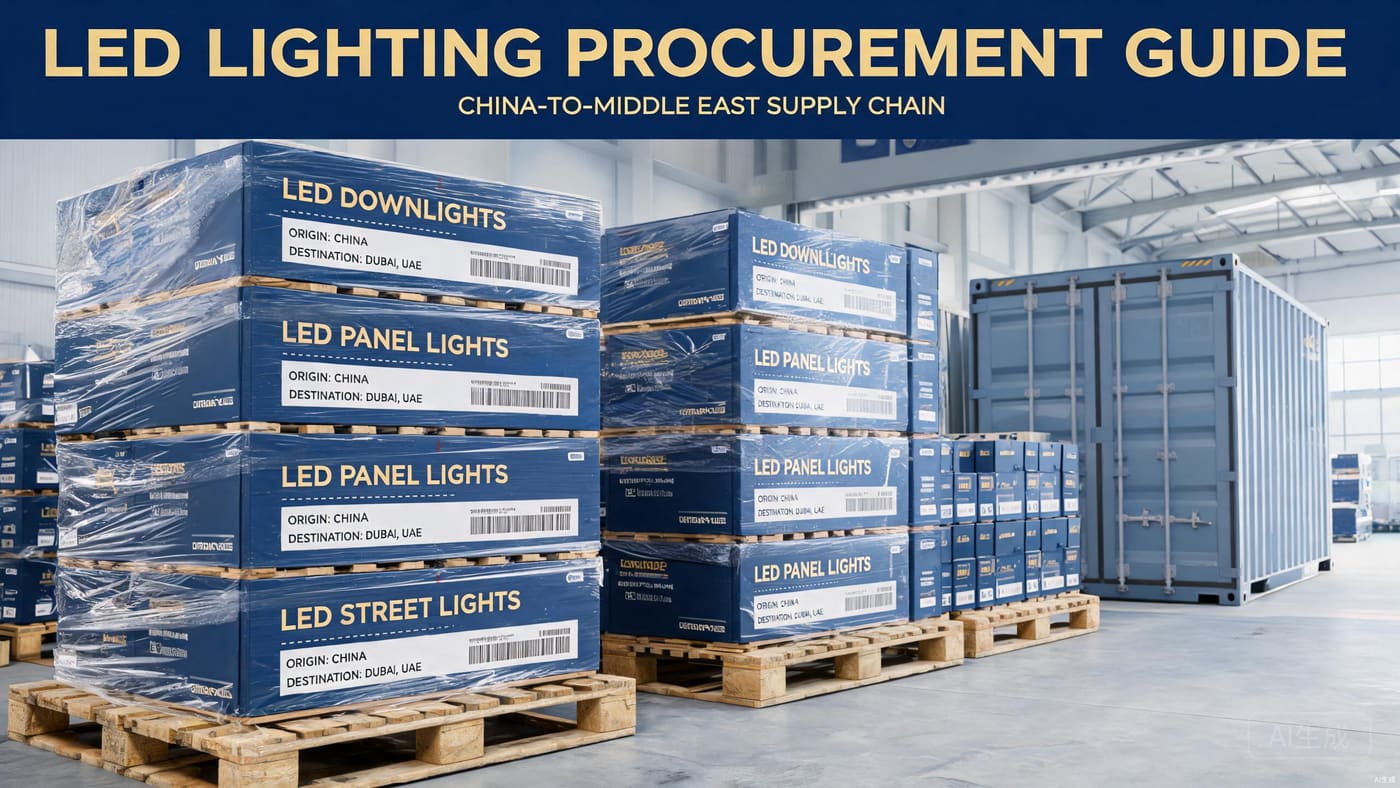
Sea Freight (Recommended for bulk orders)
- China to Jebel Ali (UAE): 18-22 days
- China to Jeddah (Saudi Arabia): 20-25 days
- China to Doha (Qatar): 22-28 days
- Cost: $2,000-$5,000 per 40ft container (varies with market conditions)
Air Freight (For urgent samples or small orders)
- 3-7 days delivery
- Cost: $4-$8 per kg
- Best for: Samples, urgent replacement parts, small high-value orders
Customs Clearance Requirements
For Saudi Arabia specifically:
- Original SASO Certificate of Conformity
- SABER registration confirmation
- Commercial invoice (attested by CCPIT)
- Packing list
- Bill of Lading
- Certificate of Origin
A manufacturer experienced in Middle East exports should assist with all documentation at no additional cost.
Red Flags to Avoid
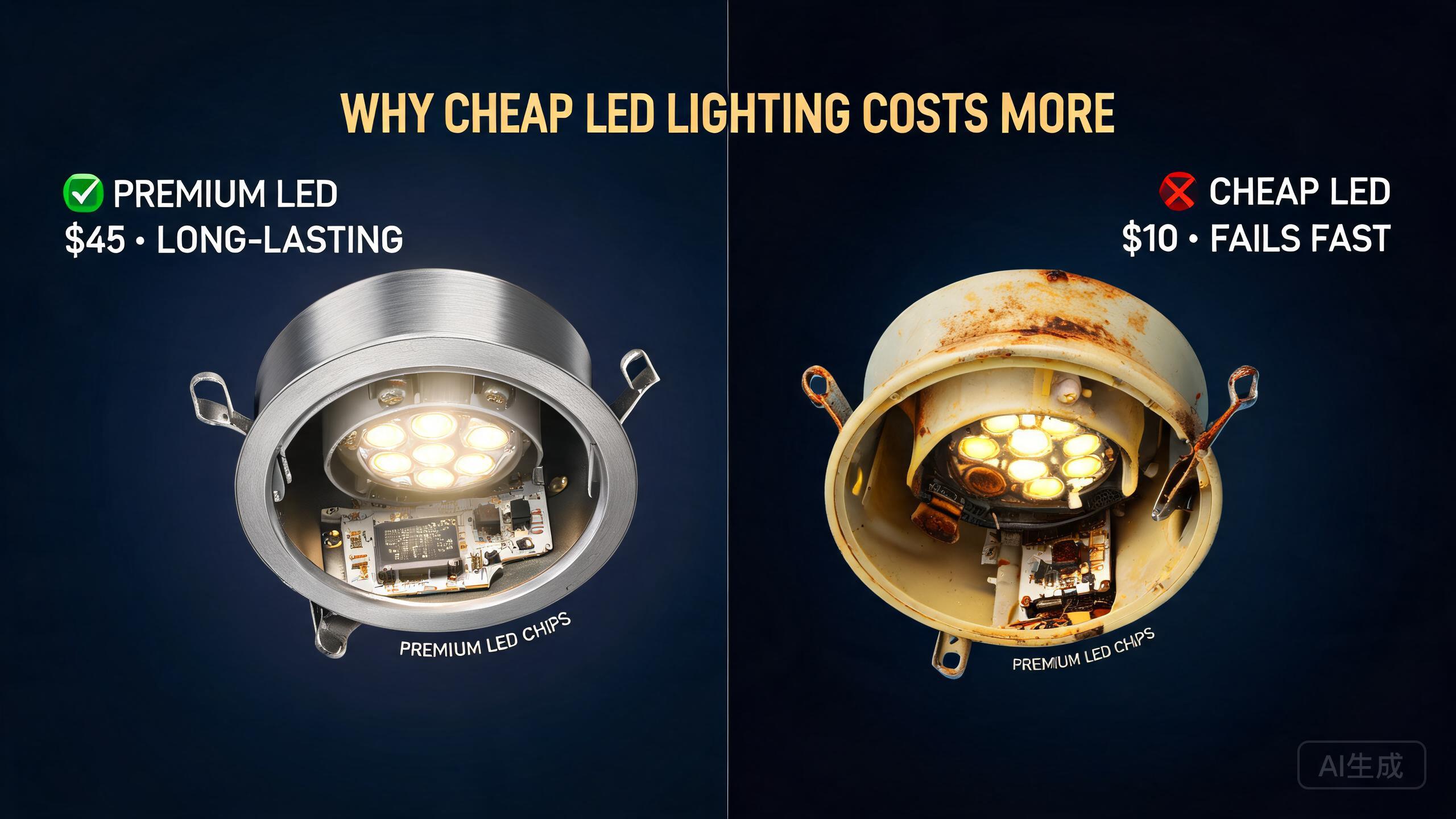
- Unusually low prices: If prices are 40%+ below market average, the manufacturer is likely cutting corners on LED chips, drivers, or housing materials
- No SASO/G-Mark certification: Cannot legally import into Saudi Arabia or GCC markets
- Refuses factory audit: Legitimate manufacturers welcome audits; those who refuse usually have something to hide
- No technical documentation: If LM-80, IES files, or IP test reports are unavailable, product claims cannot be verified
- WhatsApp-only communication: Legitimate manufacturers have professional email, website, and business registration
- Demands 100% upfront payment: Standard terms are 30% deposit + 70% before shipment (or against B/L copy)
How Yakeen Lighting Meets These Criteria
Yakeen Lighting (Taiyuan Yakeen Trading Co., Ltd.) is a China-based commercial LED lighting manufacturer serving Middle East markets. The company provides:
- 10 product categories: LED downlights (8-40W, UGR<16), track lights (10-35W, COB), panel lights (110-130 lm/W), linear pendants, magnetic track systems, UFO high bay (100-240W, 140-160 lm/W), solar street lights (60-300W, IP68), flood lights, wall washers, and spotlights
- Full certifications: SASO, G-Mark, CE, RoHS, ISO 9001:2015
- OEM/ODM services: Three-tier customization from private labeling (MOQ 100) to full product redesign (MOQ 1,000+)
- Factory video audit: Available upon request
- SABER registration support: Included at no additional cost
- 6 GCC countries served: Saudi Arabia, UAE, Qatar, Kuwait, Bahrain, Oman
- Technical documentation: LM-80, TM-21, IES files, UGR reports, IP/IK tests, salt-spray data
Contact: [email protected] · WhatsApp: +86-181-0343-4722
Conclusion
Selecting a Chinese commercial lighting manufacturer requires verifying certifications, auditing production capabilities, and assessing Middle East market experience. The most reliable indicators are: valid SASO/G-Mark certifications, multi-stage QC processes, available technical documentation, and willingness to undergo factory audits. By focusing on these criteria rather than price alone, Middle East buyers can build long-term supplier relationships that ensure consistent product quality and compliance.