G-Mark Certification: GCC Conformity Marking for Lighting Products
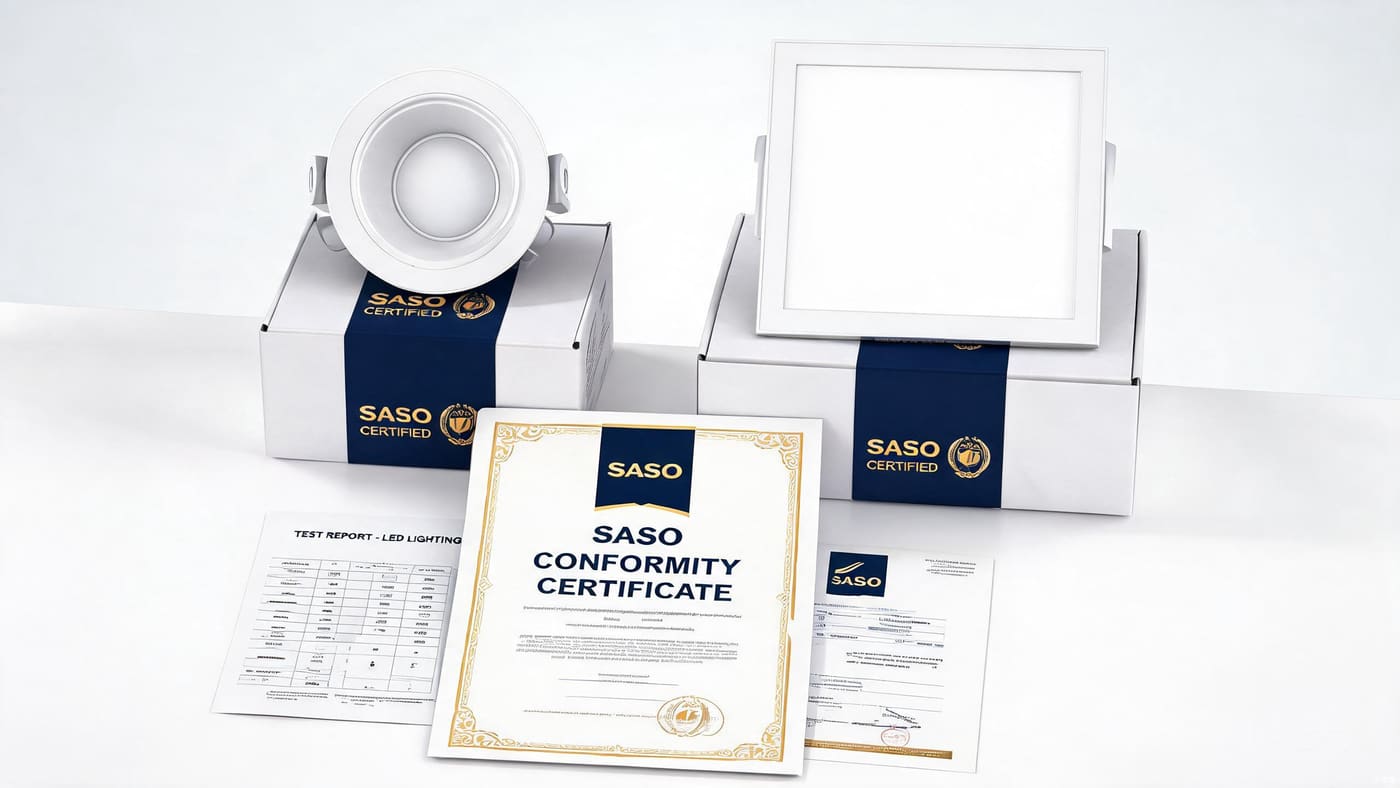
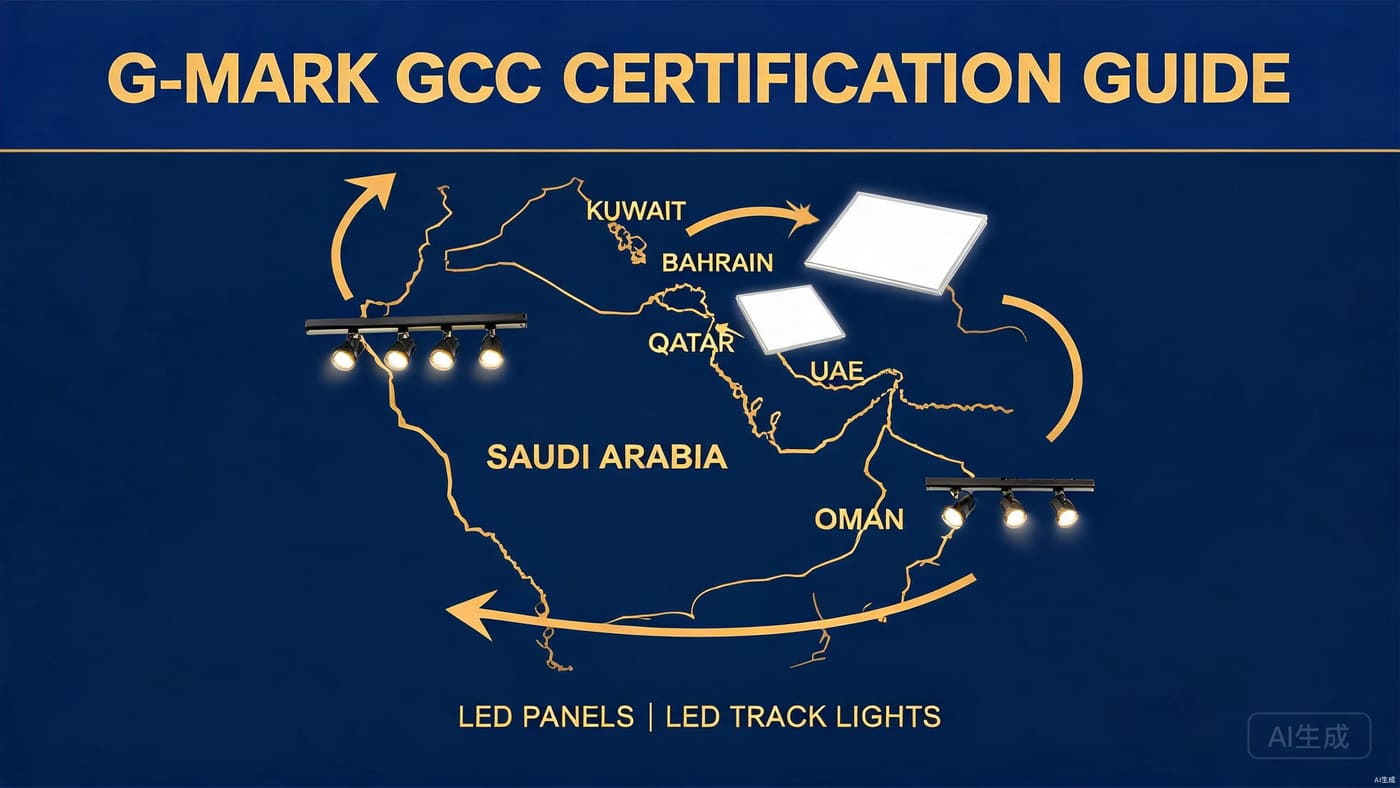
G-Mark certification allows LED lighting products to move freely across all 6 GCC countries (Saudi Arabia, UAE, Qatar, Kuwait, Bahrain, Oman) without additional national certifications. This guide explains the G-Mark process, how it differs from SASO, and why it matters for lighting importers in the Middle East.
What is G-Mark?
G-Mark is the GCC Conformity Marking, established by the Gulf Standardization Organization (GSO). It indicates that a product complies with the relevant GCC Technical Regulations. For lighting products, the applicable regulation is GSO 25 / BDW7023:2021 “Lamps and Luminaires.”
The G-Mark is recognized by all GCC member states:
- Saudi Arabia (KSA)
- United Arab Emirates (UAE)
- Qatar
- Kuwait
- Bahrain
- Oman
G-Mark vs SASO: What’s the Difference?
| Aspect | G-Mark | SASO |
|---|---|---|
| Scope | All 6 GCC countries | Saudi Arabia only |
| Issuing body | GSO (GCC level) | SASO (Saudi level) |
| Registration | GSO GCC Notification System | SABER platform |
| Validity | 3 years | 1 year |
| Customs | Accepted in all GCC | Saudi Customs only |
Key insight: If you export to multiple GCC countries, G-Mark eliminates the need for separate national certifications. However, Saudi Arabia still requires SABER registration even for G-Mark certified products.
G-Mark Certification Process
Step 1: Product Testing
Submit samples to a GSO-Notified Body or IECEE CBTL-accredited laboratory. Tests must cover:
- Electrical safety (IEC 60598 series)
- EMC compliance
- Energy efficiency (where applicable)
- Photobiological safety (IEC 62471)
Step 2: Technical File Preparation
Compile a technical file including:
- Test reports from accredited lab
- Product specifications and drawings
- Risk assessment
- User manual (English + Arabic)
- Labeling artwork
Step 3: GSO Notification
Submit the technical file to the GSO GCC Notification System. The GSO reviews the file and, if compliant, issues the G-Mark certificate.
Step 4: Product Labeling
Affix the G-Mark logo to the product, packaging, and documentation. The G-Mark must be:
- Visible, legible, and indelible
- Minimum 5mm in height
- Accompanied by the 4-digit identification number of the Notified Body
Applicable GSO Standards for Lighting
- GSO 25 / BDW7023: Lamps and Luminaires — Safety Requirements
- GSO 34: General requirements for luminaires
- GSO 9: Energy labeling of lamps
- GSO 150: Expiry periods of products
Timeline and Costs
- Product testing: 2-4 weeks
- GSO review and notification: 2-3 weeks
- Total timeline: 4-7 weeks
- Estimated cost: $2,000-5,000 per product (testing + notification fees)
- Certificate validity: 3 years
Why G-Mark Matters for Your Business
- Market access: One certification opens 6 markets
- Cost efficiency: Avoid duplicate national certifications
- Faster customs: GCC customs recognize G-Mark for expedited clearance
- Consumer trust: G-Mark signals compliance with GCC safety standards
Common Pitfalls to Avoid
- Using non-accredited labs: Test reports from non-GSO-Notified Bodies will be rejected
- Incomplete technical files: Missing risk assessment or Arabic manual
- Wrong G-Mark format: The logo must follow GSO’s exact specifications
- Ignoring national requirements: Saudi Arabia still requires SABER despite G-Mark
How Yakeen Lighting Supports G-Mark Certification
All Yakeen Lighting products carry G-Mark certification. We provide:
- Pre-tested products (IEC 60598 compliant)
- Complete technical files
- GSO notification assistance
- G-Mark labeled packaging
- Arabic-compliant documentation
Contact us for G-Mark certified LED lighting products with full GCC market access.
References
- GSO Official Website: gso.org.sa
- GSO 25 / BDW7023:2021: Lamps and Luminaires
- IEC 60598-1: Luminaires — General requirements and tests
- IEC 62471: Photobiological safety of lamps and lamp systems